The Sim-to-Real Gap: Why Simulation-Trained Policies Fail and How to Bridge It
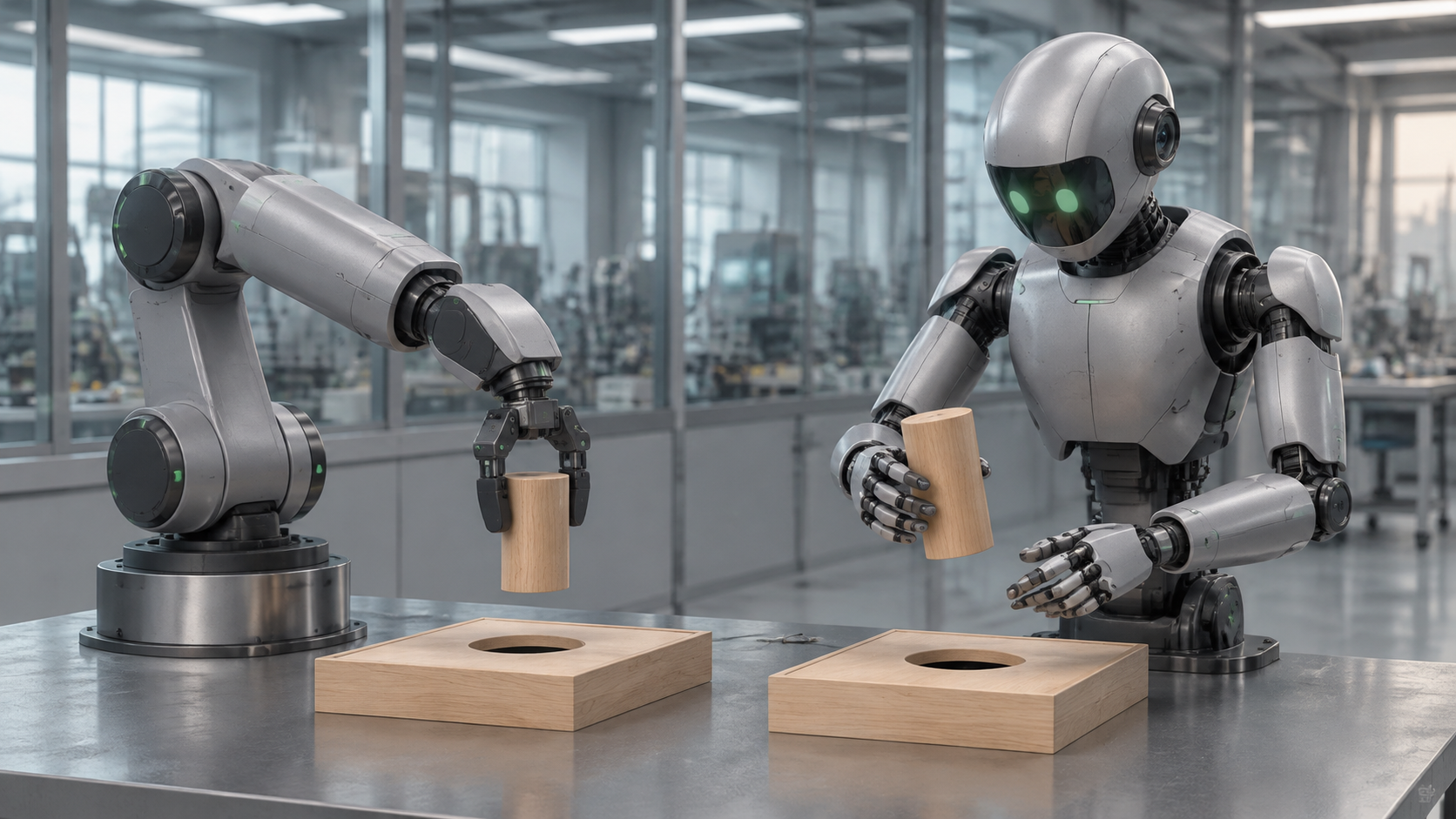
One of the most persistent challenges in modern robotics is the "sim-to-real gap"—the discrepancy between how an AI model performs in a simulated environment and how it behaves in the physical world. A robotic arm that flawlessly manipulates objects in a physics engine will often fail catastrophically when deployed on real hardware. Understanding and overcoming this gap is the key to scalable physical AI.
Understanding the Gap
Simulation is an approximation of reality. No matter how advanced the physics engine, it cannot perfectly model the infinite complexities of the physical world. Friction coefficients change based on temperature and wear. Sensors suffer from noise, glare, and degradation. Motor actuators have microscopic delays and non-linear torque responses.
When a reinforcement learning agent trains in simulation, it often learns to exploit these microscopic inaccuracies—a phenomenon known as "reward hacking." When transferred to reality, the "hacks" no longer work, and the policy fails.
Domain Randomization: Embracing Chaos
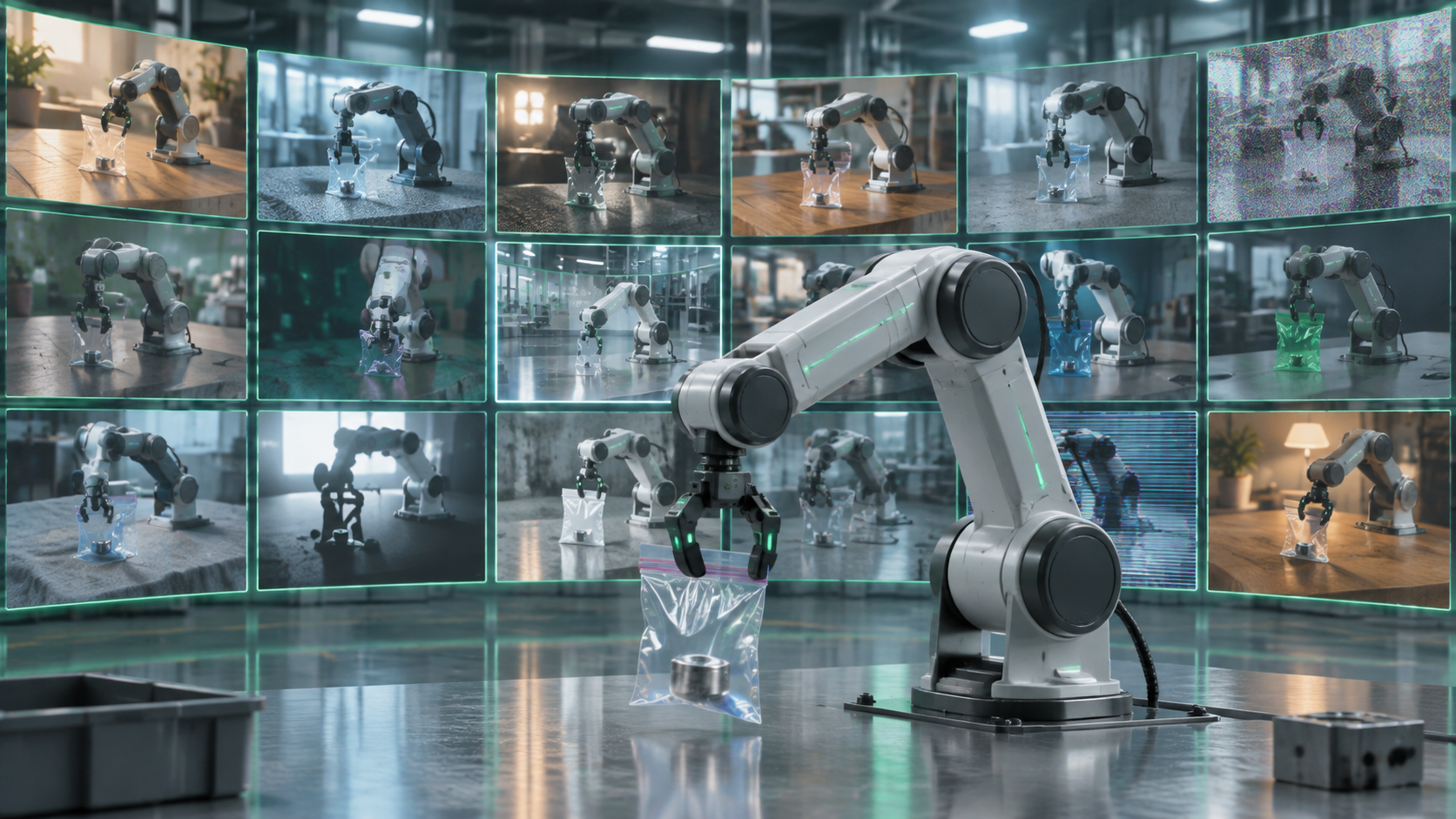
The most effective technique for bridging the sim-to-real gap is Domain Randomization. Instead of trying to build one perfectly accurate simulation, we build millions of slightly inaccurate ones.
- Visual Randomization: We randomize lighting, textures, camera angles, and background environments. The model learns to ignore visual noise and focus on the core geometry of the task.
- Dynamics Randomization: We randomly alter the mass of objects, the friction of surfaces, and the latency of joints. The policy is forced to become robust to physical variations.
By training the model across a massive distribution of simulated realities, the actual physical world simply becomes one more variation within the distribution it has already mastered.
"If you train a model in a perfect simulation, it will break in the real world. If you train it in a million chaotic simulations, the real world just looks like another Tuesday."
High-Fidelity Physics and System Identification
While randomization is powerful, it must be anchored by high-fidelity physics. We utilize advanced contact modeling and soft-body dynamics to simulate complex interactions, such as a robotic gripper handling a deformable polybag.
Furthermore, we use System Identification—a process where data from the physical robot is fed back into the simulation to continuously tune the physics engine's parameters, bringing the virtual world closer to reality over time.
Lessons Learned from the Field
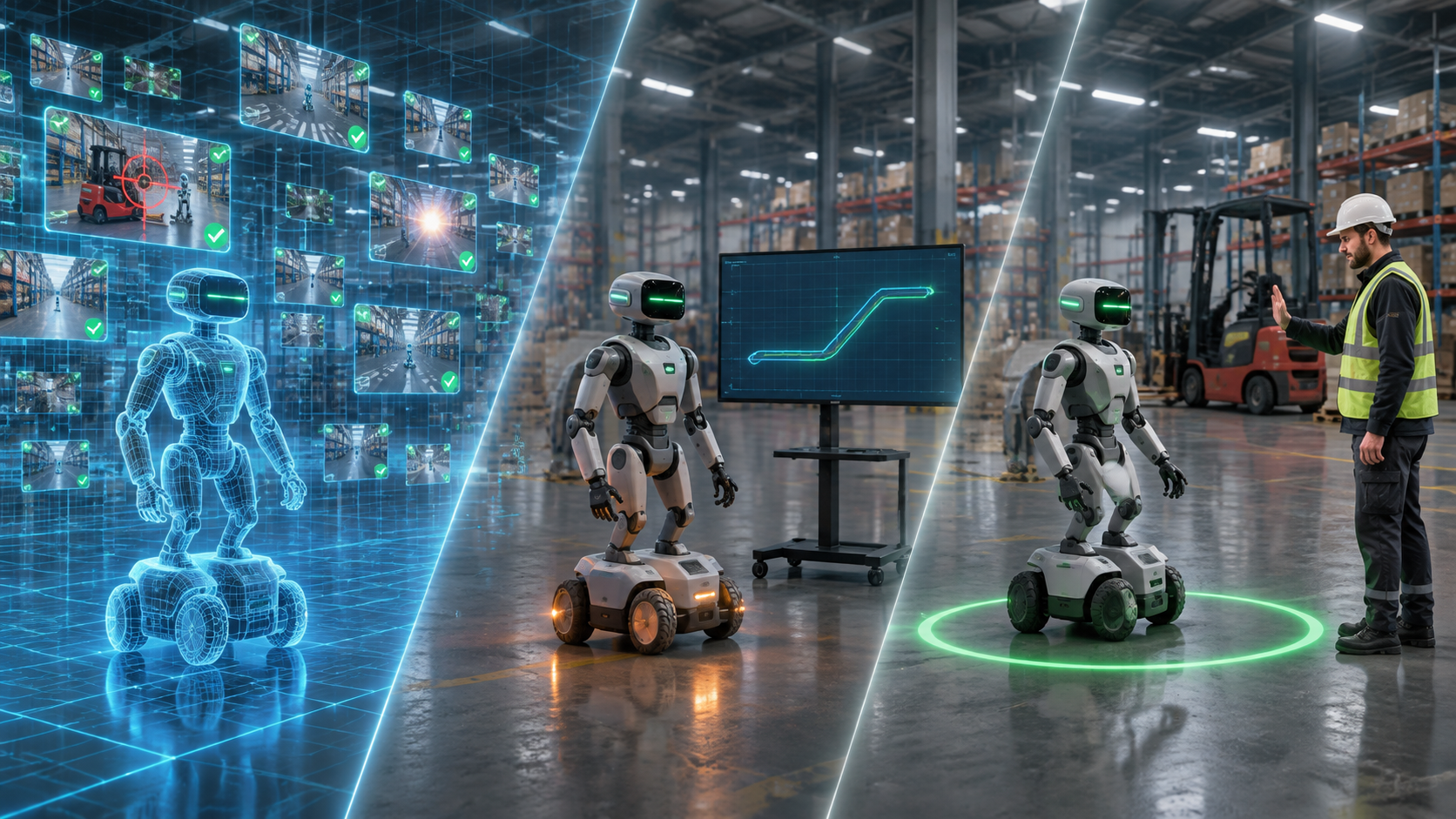
Our deployments have taught us that the sim-to-real gap is never fully closed; it is managed. Successful transfer requires a hybrid approach: heavy lifting in simulation via domain randomization, followed by brief, targeted fine-tuning on physical hardware using real-world data.
As simulation technologies improve and foundation models become more generalized, the sim-to-real gap is shrinking. The result is a faster, safer, and more cost-effective pipeline for deploying intelligent automation into enterprise environments.
About Denali Elevate Editorial Team
Denali Elevate Editorial Team is our Lead Robotics Researcher with 10+ years in simulation and real-world robotics. Published 20+ papers in top-tier venues.