Building Resilient Autonomy: Failure Modes, Redundancy, and Human Oversight

In the controlled environment of a research lab, autonomous systems perform beautifully. In the chaotic reality of an active enterprise facility, things break. Sensors get covered in dust, network connections drop, and human workers behave unpredictably. Building physical AI for the enterprise is not just about making systems smart; it is about making them resilient.
Understanding Common Failure Modes
Resilience begins with acknowledging how systems fail. In our experience deploying thousands of autonomous agents, failures typically fall into three categories:
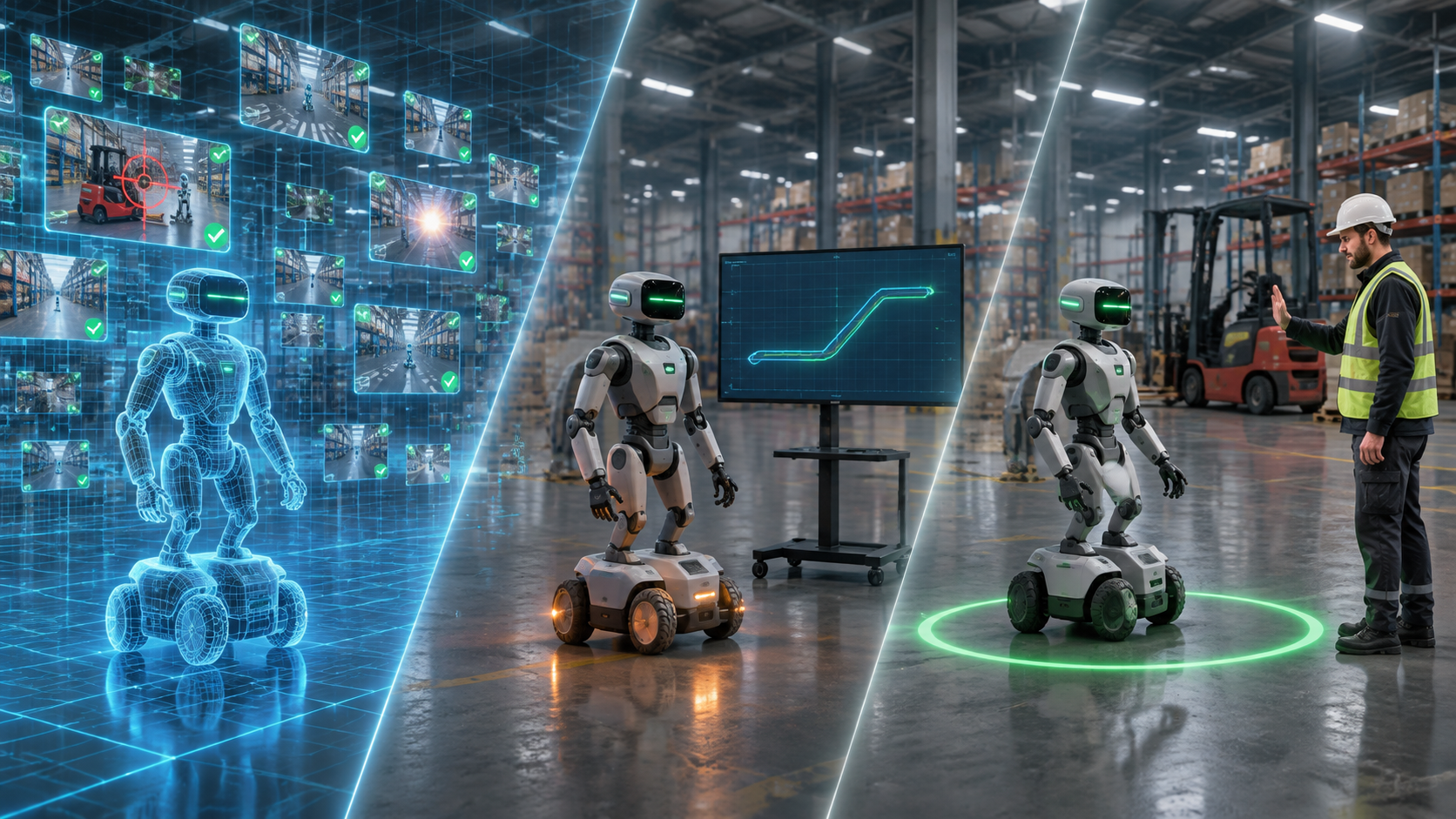
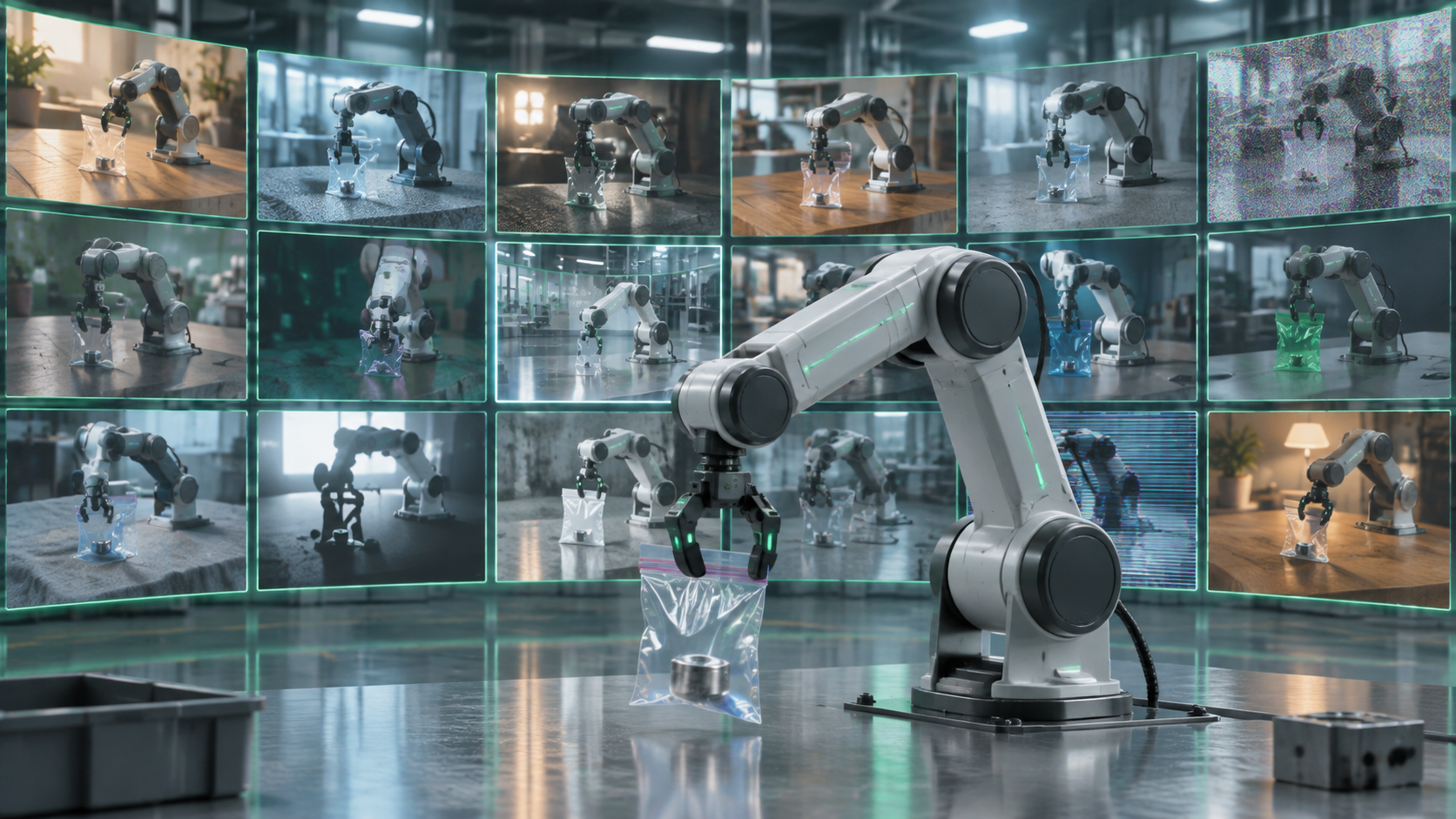
- Perception Failures: Glare from a forklift headlight blinds a camera, or a LiDAR sensor is obscured by debris.
- Compute/Network Failures: The edge compute module overheats, or the facility's Wi-Fi drops, severing the connection to the fleet manager.
- Edge Case Paralysis: The AI encounters a scenario it has never seen (e.g., a spilled pallet of shrink wrap) and freezes because its confidence threshold drops below the safety margin.
Redundancy and Failover Architectures
To combat these failures, resilient systems require deep redundancy. If a primary vision model fails due to lighting, a secondary, simpler LiDAR-based heuristic must instantly take over to bring the robot to a safe stop.
Network resilience is equally critical. Autonomous agents must be capable of operating entirely on edge compute. If the connection to the central server is lost, the robot should not shut down; it should seamlessly transition to a localized, conservative operating mode until connectivity is restored.
"A truly resilient system doesn't just survive failures; it detects them, isolates them, and degrades gracefully without compromising safety."
Real-Time Monitoring and Teleoperation
No AI is perfect. When an autonomous system encounters an edge case it cannot resolve, it must have a mechanism to ask for help. We implement real-time telemetry monitoring that flags low-confidence decisions.
When a robot is "stuck," it alerts a human operator who can seamlessly take over via remote teleoperation. Crucially, this human intervention is recorded and fed back into the training pipeline. The edge case that caused the failure today becomes part of the training data that prevents the failure tomorrow.
Predictive Maintenance
Resilience also applies to the physical hardware. By analyzing the micro-vibrations of motors and the thermal output of compute modules, AI can predict hardware failures weeks before they occur. This shifts maintenance from a reactive emergency to a scheduled operational task, drastically reducing unplanned downtime.
Lessons from the Field
The most important lesson we've learned is that resilience is a continuous process. It requires a tight feedback loop between physical operations, data engineering, and model training. By designing systems that expect failure and learn from it, we build autonomous infrastructure that grows more robust with every hour of operation.
About Denali Elevate Editorial Team
Denali Elevate Editorial Team is our Director of Field Operations with 14+ years in autonomous systems deployment. Led 50+ enterprise implementations.