Safety Protocols for Deploying Autonomous Robots in Manufacturing: Beyond the Yellow Cage
Traditional industrial automation relied on physical separation: perimeter fencing, interlocked gates, and the cutting of power whenever an operator entered the workspace. This model worked because stationary robotic cells followed predetermined paths within isolated zones.
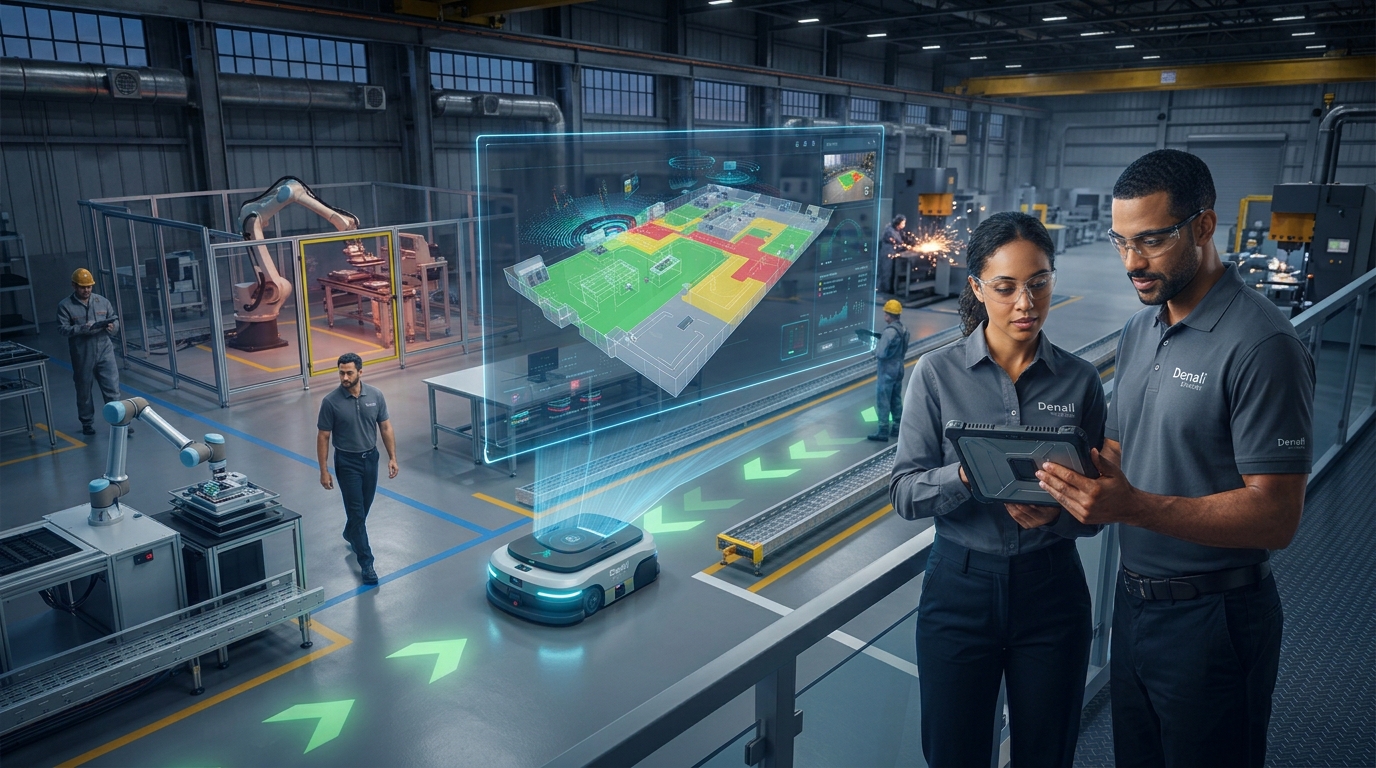
Autonomous Mobile Robots (AMRs), collaborative manipulators, and machine vision systems now operate in close proximity to facility personnel, manual material-handling equipment, and moving inventory. Removing physical barriers shifts safety requirements from passive containment to continuous, active management. Implementing these systems without compromising productivity or worker safety necessitates a structured engineering framework—one that includes risk mapping, deterministic hardware constraints, sensor redundancy, and rigorous operational management on the factory floor.
1. Risk Assessment and Dynamic Zone Design
Unlike stationary equipment, autonomous platforms follow variable paths. Safety design begins well before deployment, with an assessment of both the platform’s kinematics and the facility’s traffic layout.
Task-Based Hazard Mapping: Engineers conduct audits of intersections where human workflows cross automated routes—such as charging stations, pallet transfer points, blind corners, and maintenance corridors.
Speed and Separation Monitoring: Rather than relying on a single, binary "stop" boundary, these systems utilize LiDAR and depth sensors—rated to appropriate safety standards—to establish multi-layered zones. An outer warning zone triggers a reduction in speed and an audible alert, while an inner safety zone initiates a safety-rated stop before any physical contact can occur. Force and Torque Limiting: For manipulators operating near assembly lines, monitoring joint torque—combined with the use of compliant (flexible) tooling—ensures that any unexpected contact forces remain below the thresholds established to prevent biomechanical injuries.
2. Deterministic Limiters vs. Probabilistic AI
While machine learning models excel at perception and trajectory optimization, their outputs are inherently probabilistic. In industrial environments, probabilistic logic cannot serve as the final authority for defining life-safety boundaries.
Hardware-Based Safety Controllers (PLCs): Core safety functions—such as emergency stops, speed limitations, and the detection of safety-zone breaches—must be handled by certified, deterministic safety controllers that are isolated from the primary AI computing stack. If the perception module freezes or fails, the safety PLC triggers a controlled stop of the platform within milliseconds.
Runtime Kinematic Constraints: Software-based monitoring tools verify every trajectory generated by the AI planner against predefined physical rules—such as minimum clearance from structures, payload stability thresholds, and restricted zones for pedestrian movement—blocking any commands that violate these constraints.
3. Sensor Redundancy and Performance-Degradation Protocols
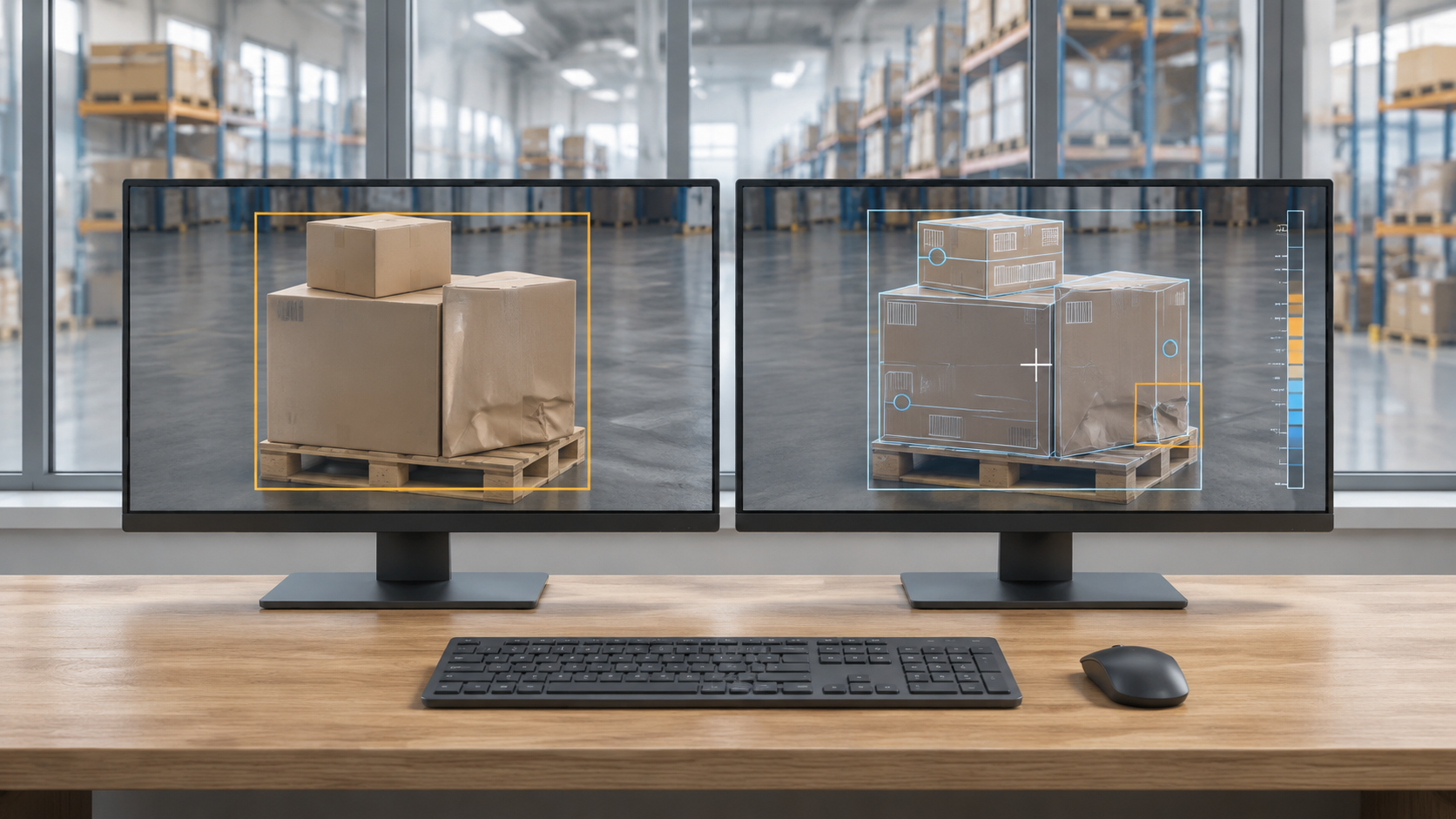
In manufacturing environments, optical and ranging sensors are subject to performance degradation caused by factors such as welding glare, coolant mist, airborne particulates, and reflective shrink-wrap film. A robust safety architecture must account for such potential declines in perception performance during the course of a shift. Cross-modal verification: Combining secure 2D/3D LiDAR with stereoscopic vision, ultrasonic sensors, and wheel odometry eliminates blind spots caused by low-profile obstacles or reflective surfaces.
Graceful degradation modes: When sensor data confidence falls below a certain threshold—due to occlusion, glare, or communication latency—the platform must not attempt to extrapolate its path. Standard protocols trigger an immediate reduction in speed: limiting velocity, switching to conservative fallback routes, or coming to a full stop and alerting an operator.
4. Pre-deployment verification and integration with Denali
Theoretical risk assessments rarely account for the edge cases that emerge during actual production shifts. Verifying how autonomous systems behave amidst sensor noise, traffic congestion, or component malfunctions requires rigorous testing before the fleet is deployed in the same space as human operators.
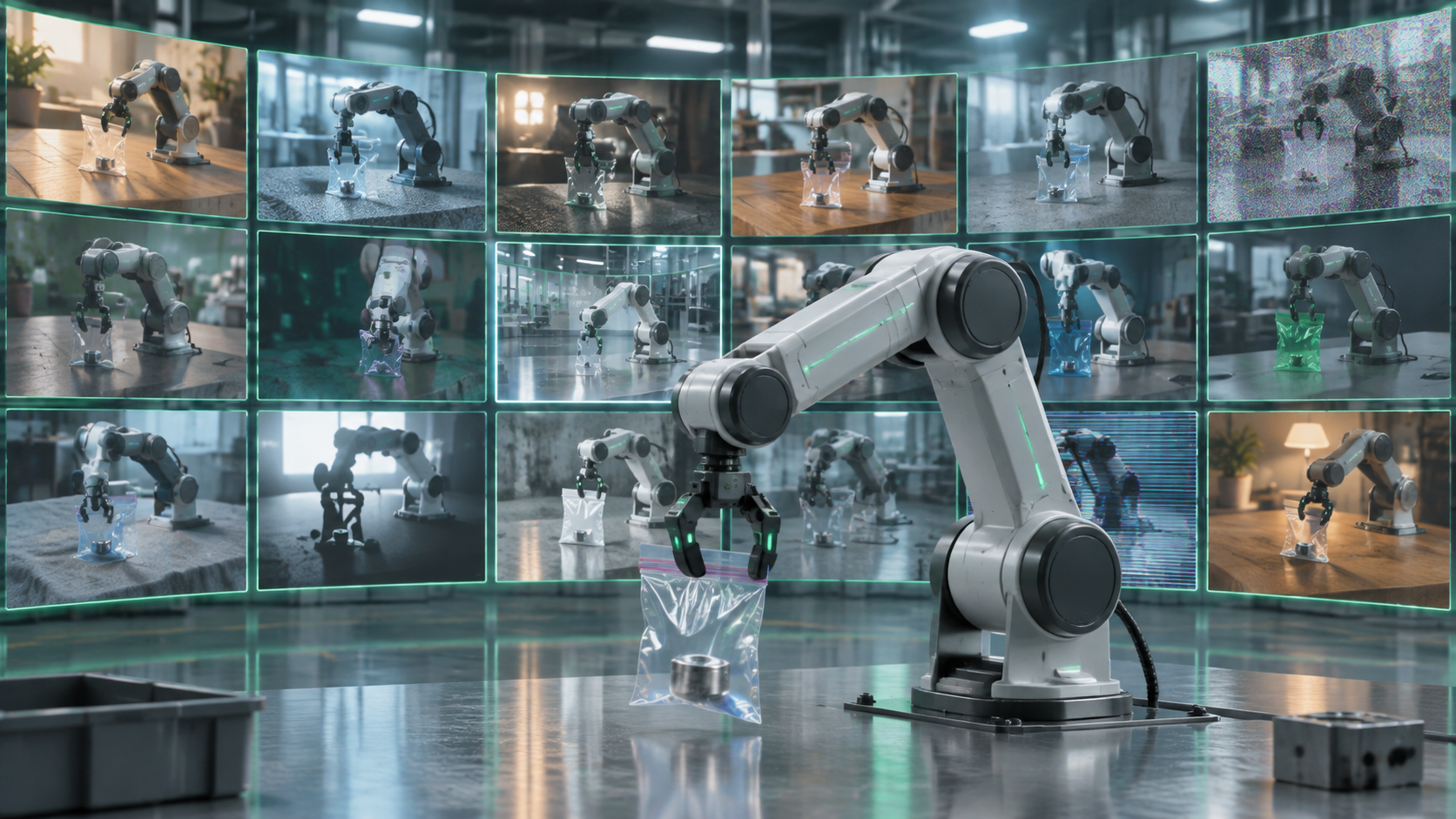
Full-stack integration partners like Denali (denalielevate.com) address this challenge by embedding verification directly into the deployment pipeline. Rather than treating safety as a post-integration check, Denali validates perception, path planning, and fleet coordination through high-fidelity, physically accurate simulations across thousands of scenarios.
About Denali Elevate Editorial Team
The Denali Elevate Editorial Team covers physical AI, robotics infrastructure, simulation, and enterprise deployment practices.